
As I was navigating through yet another of those massive traffic snarl at Ma Flyover caused by reasons unknown, the flyover being dotted with cars, an underlying fear of being late at 1/1 Bishop Lefroy Road kept me nervy. It was then the mobile beeped. The appointment at six in the evening has been rescheduled to six thirty, giving me that extra cushion to gaze through the car window as Kolkata welcomed yet another winter evening. A luxury which is about to fade in a couple of days time.
Bishop Lefroy Road, tucked beside Lee Road is no ordinary destination. It has housed a genius who, according to many, is arguably the greatest multi talented Bengali after Rabindranath Tagore to don the space of art and culture. Satyajit Ray stayed here for 22 long years. The same Man who was many in one. A film director, screenwriter, lyricist, author, illustrator, magazine editor, composer and calligrapher. It does not end here. Add to it his contribution to Bengali literature, having created two of the most iconic characters in Feluda, the sleuth and Professor Shonku, the brilliant and enigmatic scientist. The colonial flat at 1/1 Bishop Lefroy Road remained the most creative years for 6’3″. It was this sprawling building I was about to enter and meet his only son, Sandip Ray, a filmmaker by his own rights.
There is a thorough trespass as you enter the gates, declared a grade 1 heritage building by Kolkata civic body. No security points, no register to record the name of the visitor, no MyGate app asking for permission! One can smartly park the car inside without eyebrows being raised, call the lift, get inside and get down at second floor in a jiffy! This is the same lift which the then Government of West Bengal, installed once the iconic director suffered a heart attack while filming of Ghare Baire and doctors advised against taking stairs. There is nothing to suggest that it housed a legend for 22 years (from Pratidwandi to Agantuk) except an antique looking letterbox named after ‘Ray Society’.
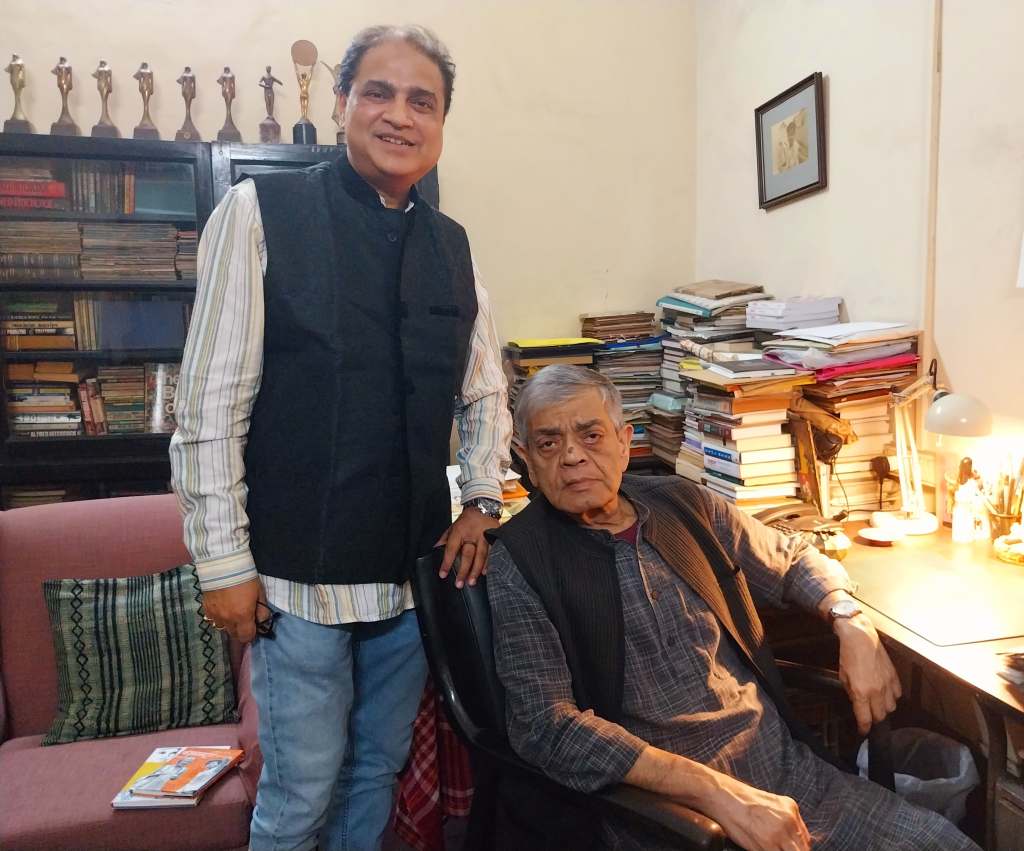
As one presses the door bell, a middle aged domestic help, with a heavy woollen headgear opens the door, apparently privy to the visitor’s scheduled arrival. Just behind him is Luchi, a beagle who runs in, have a long sniff (he had couple of more sniffs later!) and allows entry to the drawing room as I waited for the head of household to come by. As my eyes moved around the room, its high ceiling and colonial look, there is certain old school charm into anything you lay your hands upon. Just as the glorious history of the room clouded the mind and one become little unmindful, a perfectly brewed cup of tea, without sugar and milk is placed at the table in front . I am told to wait for a couple of minutes as Sandip Ray is wrapping up a Zoom call in the next room. However, it was barely my third sip, when he entered the room and the tea remained unconsumed for rest of my stay!
As we exchanged pleasantries, I cannot help noticing his impeccable dress sense. Dressed in an ash and light blue chequered traditional long cut kurta and a black half sleeve cardigan (or was it waistcoat?) with open buttons, a clean shaved Ray looked sharp and raring to go. Very quickly he glanced through some of the books meant for him straight from press which I presume would see release in the upcoming book fair. While he was largely happy with the cover and the layouts for all books but one, which he asked for some modifications to be made before the next edition. Then turning the chair he sat straight facing me. My time has begun.
Having spent an entire childhood feasting on Feluda and later Ray films, like most households of our growing up years, it is not easy to strike a conversation with someone who is guarding his father’s legacy firmly. The first thought becomes the first question. ‘Who is the Feluda’ that Ray depicted. In many of his illustrations, people said that it resembled his muse Soumitra Chatterjee, a repository of versatile talent. Was it Soumitra then? “Baba was Feluda, Professor Shonku and Sidhu Jetha all put into one. Further I do not think the illustrations has Soumitra resemblance.” Ray Junior brushes the speculation.
Not surprising that many of Felu’s love had striking likeness to that of Satyajit Ray, from travel to cricket to food.
What is next on Feluda, the fan in me cannot help ask this! “Felu needs rest” says Sandip Ray which is a clear cue that Feluda is not going to return to big screen anytime soon. He firmly believes the best Feluda after Soumitra has been Sabyasachi Chakraborty. However he reserved his comments on the new Feluda, Tota Roy Chowdhuri, showering praises on his acting prowess but not a word on the recent OTT release of ‘Bhuswarga Bhayankar’ directed by Srijit Mukherjee where Tota plays the protagonist.
As we know, Satyajit Ray’s films and literary fictions are largely devoid of violence and sex, one may still find the presence of preternatural elements in his body of work. His short stories, including the ones of Feluda, often had something called planchette (paranormal meeting). Did he actually believe in it? “Baba had an open mind on every subject. However, I have not seen him doing planchette himself”, laughs Ray Jnr. And did the Maestro watched commercial Hindi movies? “ Baba watched Sholay and liked it too”.
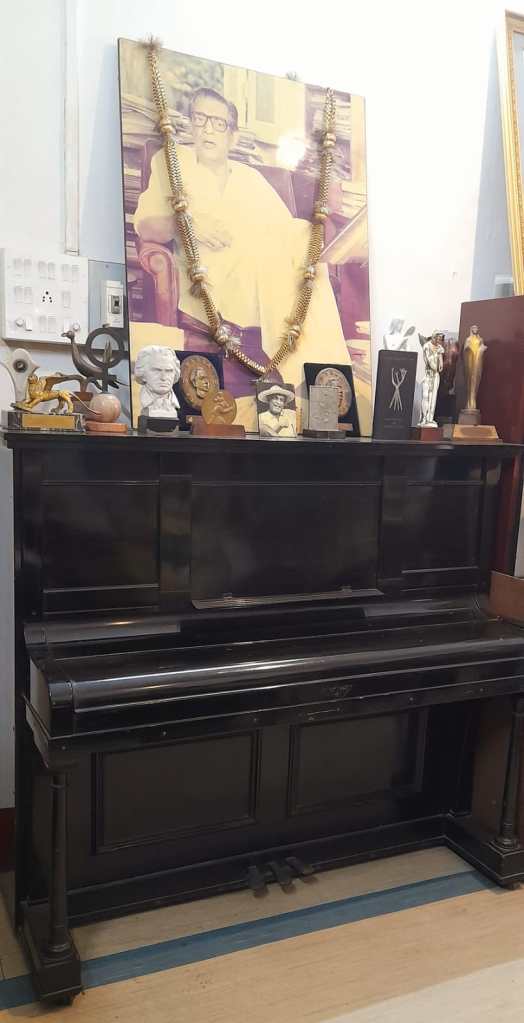
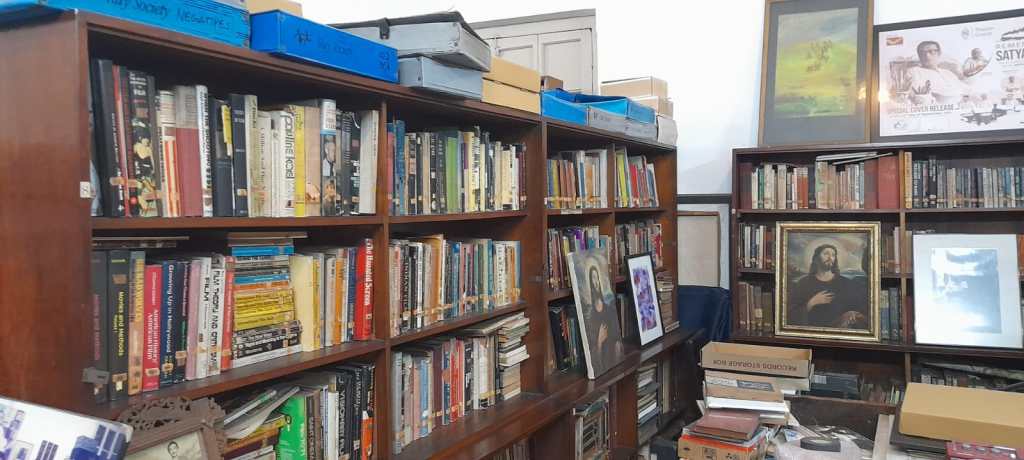
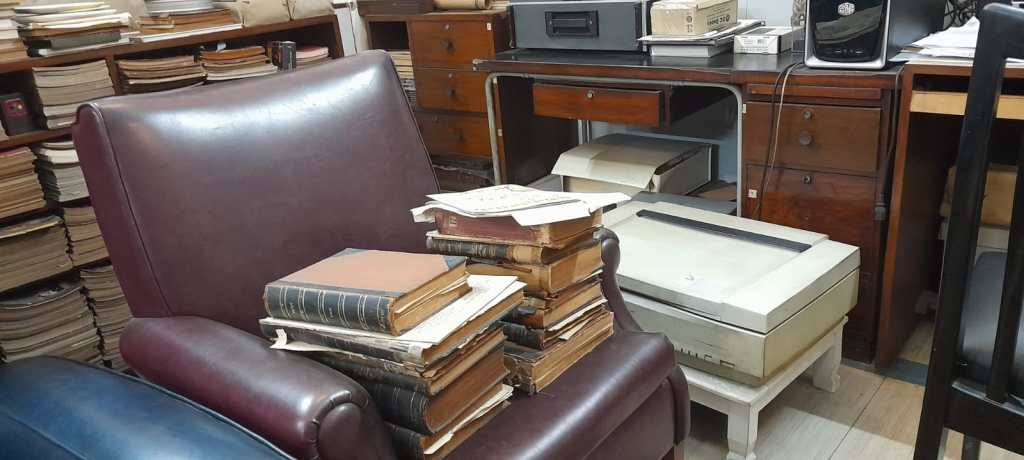
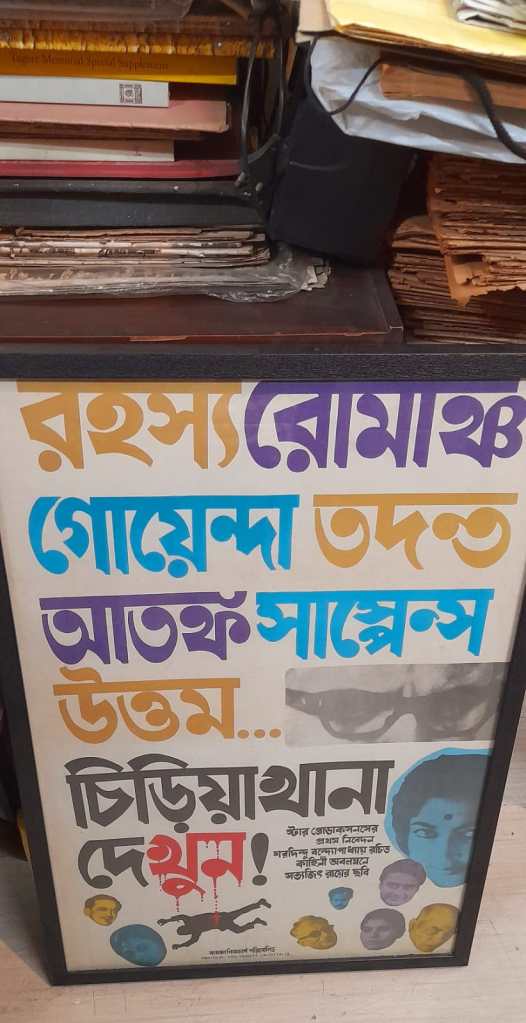
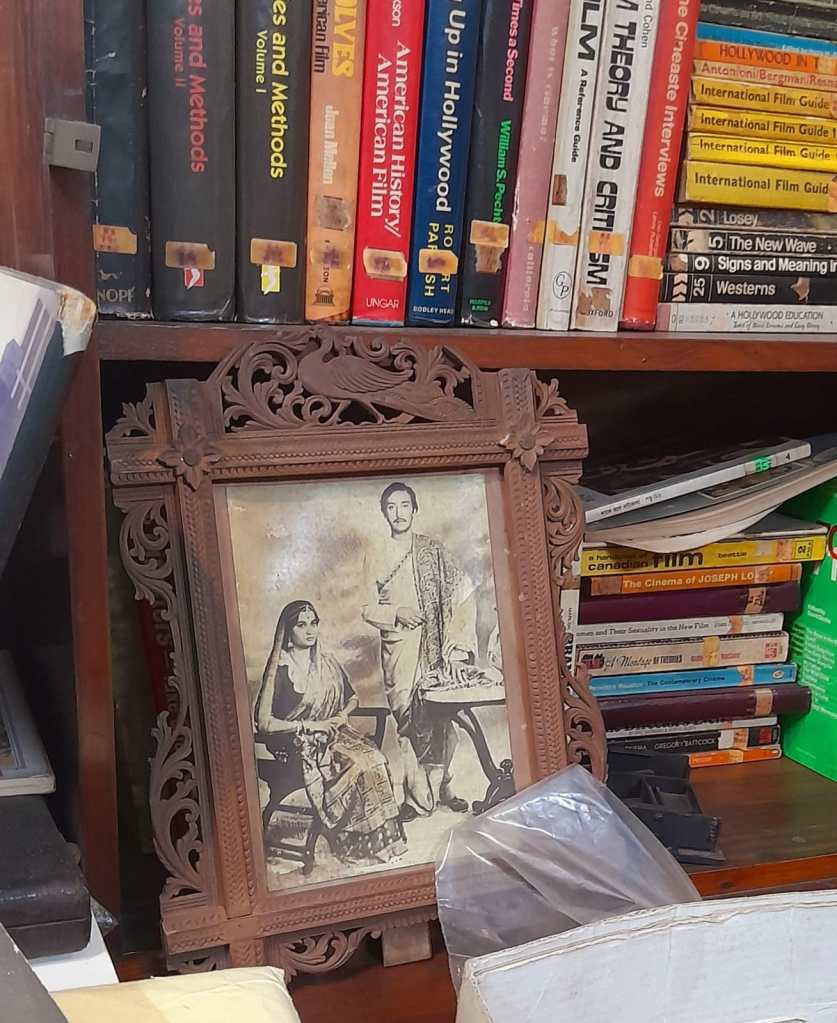
The study room of Satyajit Ray is a treasure trove with endless shelves of books. The books are properly indexed and maintained with utmost care. Books from all over the world assembled which can give any library a run for its money. I found some books written in Chinese. I am not sure how the same was deciphered in Non Google translator days. The genius mind must have worked something out. The red upholstered chair, where he sat and the large desk has seen some of his best creations being penned and still seems to wait for the deep voice and clipped upper class English accent. On one side of the room, Ray kept a Roland piano, where he used to sit and pick out tunes for his films. It is said that Ray imagined the situations in his films and wrote the songs as a test run and it was only if it turned out to be sufficiently good, he would decide to make the film. The piano still kept as it is. The tunes though are of melancholy now. There are film posters, music notation sheets, designs of costumes and sets, production stills, draft’s of Ray’s fiction, correspondence, scrapbooks, photographs tucked all over the nook and corner of the vast room.
And awards! You name it and its there. So many of them kept all over the place including Honorary Oscar in 1992 celebrating a lifetime of cinematic excellence, soldering his status as a legendary filmmaker.
Talking about Oscars which is like winning a Nobel in films, do you ever think of giving it to a museum for safe custody ( with a not so noble Nobel history) or did government approach for the same? “These all belong to our family. We will keep it with us”, snubs the proud son. Sandip Ray is doing everything possible to preserve the Ray legacy in his own way.
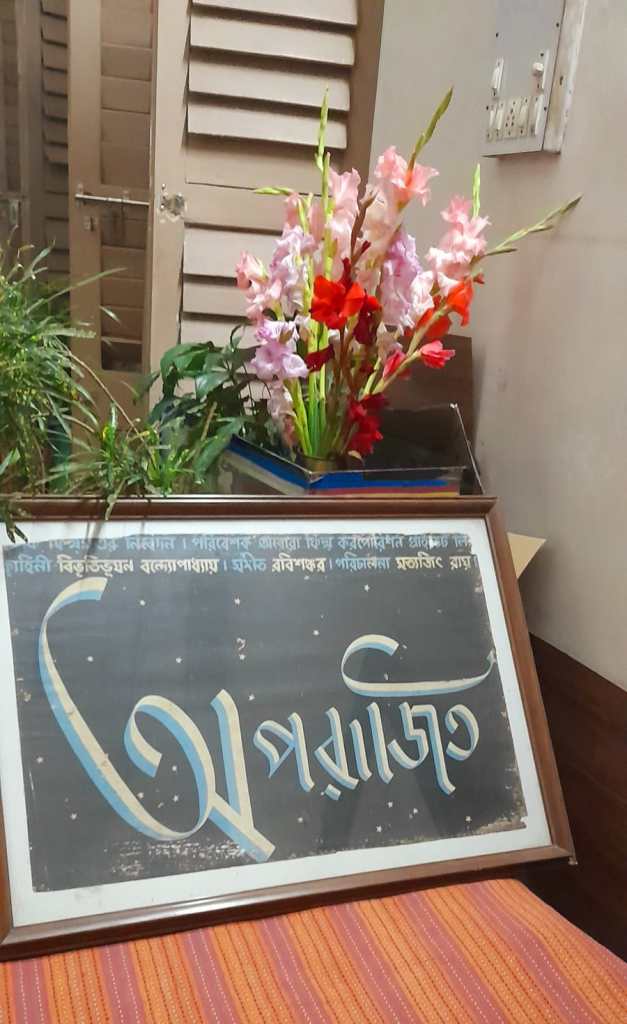
As I come to the fag end of the rendezvous, I noticed a framed poster of a film at the entrance (which is also the exit, as it happens in any flat) which I missed when I entered. Based on the story of Bhibhuti bhusan Bandopadhyay and music by Pt.Ravi Shankar, the film is a 1956 release Aparajita which is second of the Apu Trilogy. Aparajita, loosely translated in English as The Unvanquished.
I would like to believe that its not by design. Satyajit Ray is truly unvanquished. Undefeated. The legacy lives on beyond the four walls of Bishop Lefroy and refuses to die down anytime soon. So long we have something to call as cinema. The tall man with a baritone voice remains the best bet even today to world cinema long after he passed away in a fateful evening in 1992., nine days before he turned 71.
The legacy lives on.
 Dabbler's Diary
truly impressive,, Keep up the great work!!
LikeLike