
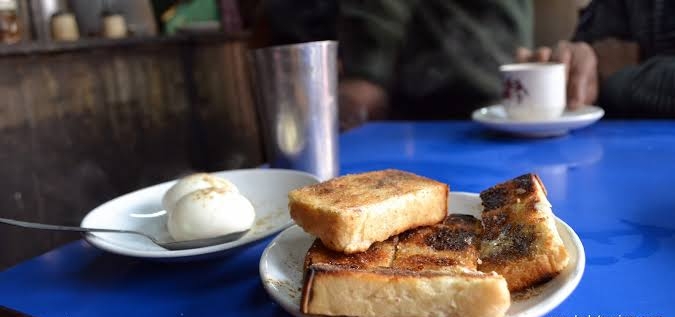
It’s very early part of the day and with the impending winter, the quaint town of Siliguri is still at snooze mode. However, the otherwise oblivious Netaji Cabin at the Bidhan Market is throbbing with life, with its signature crispy toast smeared with butter and eggs in all its avatars, boiled, omelettes or poached. A very old photograph of Netaji Subhas Chandra Bose is donning the wall. These are the same walls which has not seen a fresh coat of paint in the recent past. The iconic Subhas Bose, silently observes as hordes of people keep coming day in day out. Be it the teens just out from the high schools or the captive audience including the septuagenarian seated in one of those chairs (which barely accommodates an average….you know what!!) finishing his daily ritual of gobbling up the ‘Uttar Banga Sangbad’ and then folding back the crumpled and kinked pages in order, Netaji Cabin has seen it all. Any old timer of the city will tell you about the unending charm of this small joint amidst the onslaught of new generation cafes. This ‘blink and you miss it’ joint represents the character of the town: easy going with a lazy elegance and alluring smile.
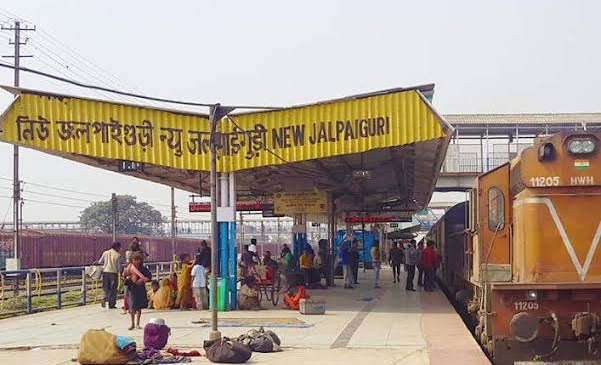
Siliguri for far too long as remained the transit point for many. Strangely for reasons that will perhaps remain buried in denial, it has never been able to revoke the same sense of déjà vu, which its nearby neighbours in the hills and Dooars enjoy. It remains the gateway to a world of happiness sans its own!
With a population of more than ten lacs, the city has grown manifold in the past few years. Seated beside the river Mahananda, it remains strategically very important for being at a handshake distance to three neighbouring countries, Bangladesh, Bhutan and Nepal. Also being very close to Sikkim, Siliguri represents a culture which is so diverse yet so warm. This urban agglomeration has a history which is engaging. “Siliguri” means a stack of pebbles or stones. This once small agricultural village in the kingdom of Sikkim later captured by Nepal in 1788, which again changed hands in 1865 when the British captured Darjeeling was transformed to modern day Siliguri when the then Bengal was divided into West Bengal and East Pakistan (later Bangladesh) in 1947, with Sikkim later merging with India in 1975. Since then the city has grown from strength to strength.
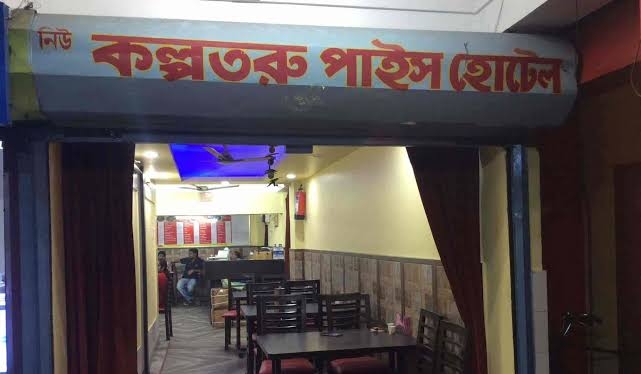
One is not sure about any other city in West Bengal with such varied cosmopolitan nature. A certain mix of lepchas, Bhutias ,Nepalese and Marwaris with the existing majority of Bengali population is a peaceful co existence in itself. It is little wonder how most of iconic pice hotel of Siliguri like Kalpataru attracts more fish loving population from the hills for its Bengali cuisines than anyone else. While locals may complain about extortionate pricing, but to have a plate of ilisher maacher deem (Hilsa spawn), there are many who remain benevolent to shed a fortune! The other illustrious company of Kalpataru Pice hotel are the nearby Kalpana and Nandita Pice hotels. Barring Kolkata who can boast of some of the iconic names in pice hotels, Siliguri too has its own stake to claim. And if you happen to be slightly enterprising, and do not mind a moderate drive for your favourite meal, there is Bapi’s hotel at Malbazar where you get the world’s best mutton curry (sorry big daddies of Kolkata, you lose this big time)! The town may also rightfully claim its contribution towards popularising Momo, a steamed dumpling made from wheat dough flat and stuffed with minced meats into a near obsession, at least in West Bengal. At one time, it was the Momo capital of the state where the usual fish coated bong tongues got their first taste of momo in this part of the state. Though now, several brands of momo are being available in the city, however the best is still the ones at some obscure Thelas at Hill Cart Road where a half closed pair of eyes hands it over with chutneys, sauces, meat broth and/or soup. And in case you remember not to deprive your sweet tooth, dash in for some Rabri at Unique at Hill Cart Road or settle for sugar syrup coated pancakes made with all-purpose flour, curd spices, khoya (dried milk solids) and topped with nuts which are better known as our very own malpuas, at Makkhan Bhog at Sevoke Road. I am sure there are many more such but I would still stick to the love of yesteryear.
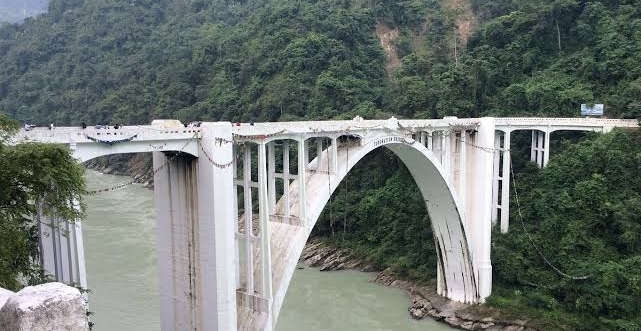
If a place is known by its food, it is also known about the feel it carries with it. Not many places one have on Earth where an half an hour drive from the cacophonous Sevoke Road can transport you to a completely different world where a gushing Teesta awaits or acres and acres of lush green tea gardens on either side of the road soothe your eyes or an enchanting Kali Temple overlooking Sevoke presents a deep serenity or a gentle swishing sound, like the rustling of leaves at Sukna forest leads you to the small hamlet of Rong Tong. If the muffled sound of leaves haunts you, travel a little further north to the Kurseong hills for a ‘cheers’ evening at Kurseong Tourist Lodge! And if you want to spice up your stay, drive to Coronation bridge on a full moon night and thank your stars later for an indescribable experience watching the luminescence of a lonely night with the reflections of the Moon on crystal clear Teesta waters. The eerie silence of the place occasionally broken by passing of trucks (to Gangtok) is deafening. Silently standing on the more than eighty-year-old coronation bridge at mid night is an experience which is sure to last a lifetime, if not more. And if you stand to be lucky, a leopard or an elephant crossing the road can just happen on your way back. No, you cannot honk. Wait for them to pass. You are clearly the intruder.
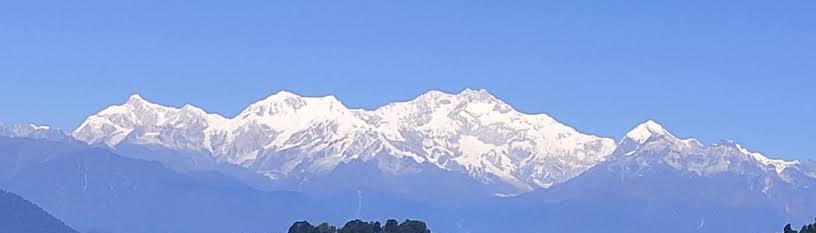
The city has its own rules.If you find people with pullovers any time of the year, you are either at Tenzing Norgay bus stand or NJP railway Station. That even the mighty Kanchanjunga is at times visible from a certain Babupara or Deshbandhu Para balcony where your checked lungi (which you usually wrap around the waist for comfort when you are not expecting any guests!!!) is up for airing remains largely downplayed for reasons not known. The illustrious Hong Kong market who introduced king size Nivea creams to the Bengal households’ decades back may have lost its former sheen but is still hard to ignore.
Often people say that North Bengal has largely been deprived by rulers back at Kolkata. That remains a debate for some other day. The cheerful souls out there do not complain. Nature has paid back in equal terms. The table tennis loving city plays the defensive lob elegantly which is possibly the most visually-impressive shot in the sport of table tennis, which remains deceptive in its simplicity. What coincidence!

The famed Lalmohon Ganguly alias Jatayu , an immortal creation of the master in Satyajit Roy, once, while describing Mumbai (then Bombay) has famously said (in Bombaiyer Bombate)”ekebare champion sohor moshai’(what a city!)! It’s a pity that he too used Siliguri as a transit point for Gangtok and Darjeeling! Or else who knows, he might have said something similar about the magic of the city!
Next time, make Siliguri more than just a transit point. It deserves better.
Champion Sohor Mosai!
**All pictures from internet
 Dabbler's Diary
Excellent write up!
It feels like knowung my own city from a different angels!
It just made me go thru our childhood days and I felt it!
Thanks mate for such a lovely piece.
LikeLiked by 1 person