
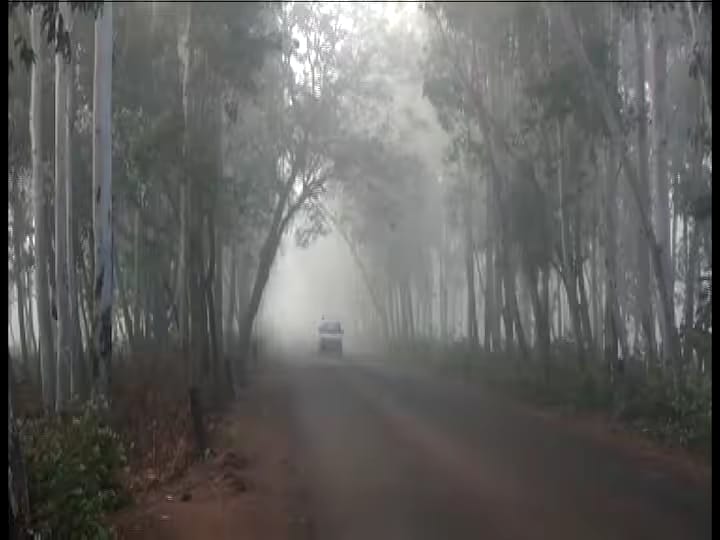
In a country like ours, or more so for a state like the one we have in West Bengal, the season of winter is certainly a delicacy. We look forward to it with the avidity of a performance appraisal. We remain sceptic, excited, joyous and ready for small experiments in life which we keep deferring throughout the year.
The season of Monsoon always picks Kerala to announce its entry. The onset of southeast monsoon over Kerala normally happens early June though of late, its temporal and spatial distribution is keeping the climatologists on their feet! The summer obviously has no such challenges. It has no date of arrival as it never goes ! It stays with us, in good and bad times, like a family patriarch! The winter is the cutest of all. Its arrival is declared with ACs running still at 24 degrees and ceiling fans denied of any rest. It goes by calendar. So, if you are in eastern part of India, in the state of West Bengal, it begins the next day of immersion of Goddesses Durga which may mean (very) early October or mid of October. In a nutshell, winter do not come. We bring in. The other season of Spring is only in poetry. No one has seen it yet.
For many (or most?), winter is a feel which is hard to ignore. Conventionally we were made to believe that onset of winter is a challenge which one need to negotiate as smartly as a chimpanzee. Every household in Bengal remains sceptical of some imaginary cold winds emancipating from the tip of the Himalayas and invading their household. The north facing windows (Himalayas is in the North) remain tightly shut while AC may still run in full blast. If tightly shut windows gives the immunity against ‘sub minus’ winds at home, it is Bengali’s own invention, the monkey cap which comes handy in these ‘testing times.’
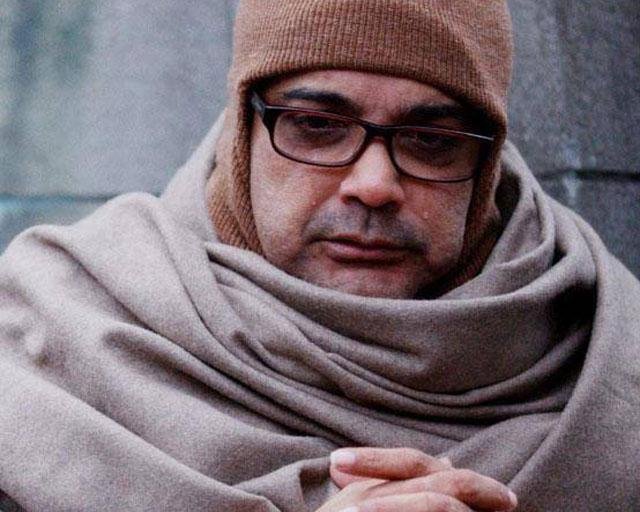
This headgear covers head, neck and ears while less fortunate nose and mouth remains exposed for occasional teeth clatter. But then, when has anyone been able to restrain a Bengali mouth! Never ever. If that was not enough, naphthalene smelling grey coloured muffler will more than compensate any cold wind which bounces back from the monkey cap and reinvade. With a double whammy protection, every Bengali emerges a winter conqueror, not withstanding a running nose.
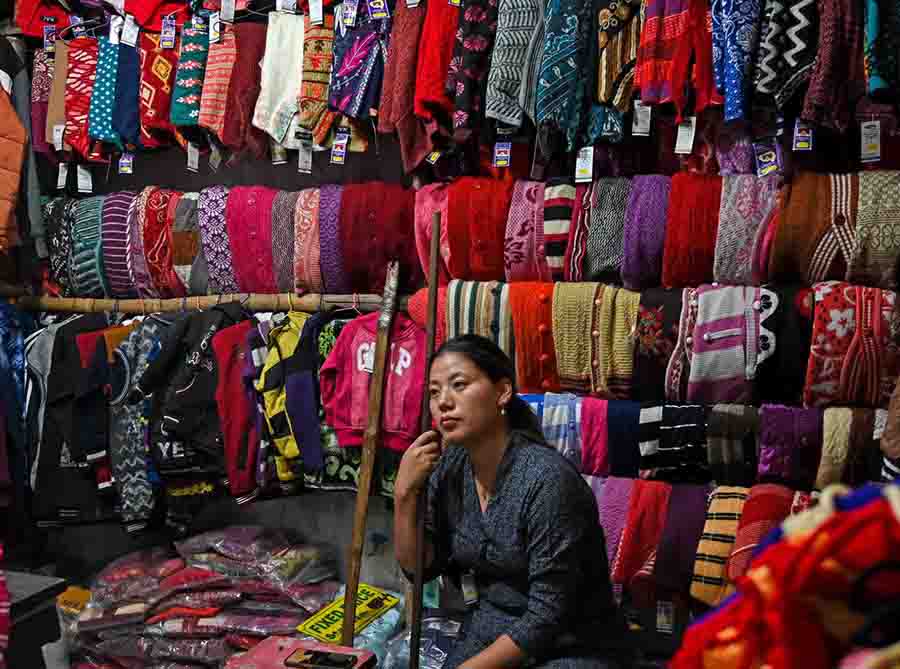
If you visit a Bengali household in a winter afternoon and find ‘Masima’ missing, she will invariably be spotted at some Bhutia market in hard bargain over a faint colour stole! These Bhutia markets are quintessential part of Bengal winters. For those who don’t know, Bhutia market is the place where all Masi, Pisi and Kakimas unite for their yearly stock of cardigan, shawl or stole which they may or may not ever wear.
Winter is also a time when there is a certain numbness in nature. Men feel ‘lonely’. That explains why most weddings in Bengali household happens during this time! The groom wears the formal suit for the first time (and perhaps last) with a necktie that has been tied either too short or too long. The suit eventually is bartered with an utensil seller by the time the child from the marriage turns five! In ‘ancient times‘, say in late 70s or early 80s, people availed LTC (Leave travel concession) during the winter to visit either Puri (mostly) or Digha armed with a huge bedding (hold all bag). Darjeeling or any other hill station visit during winter was considered as high risk as being asked to drive a Formula 1 car. The intelligent Bengali visited Darjeeling in May (with pullovers) when the children had a summer vacation. The winter was a complete no no. Gone are those days. Now the neighboring Boudi plays with snow with his Madhyamik appearing son and the innocent looking Bor poses with the Yak. Needless to say Dada with 3 likes loses against 143 (and counting) likes Boudi generates in just 15 minutes of post going online!
If winter comes, can food be far behind?! A cool Sunday breakfast will have ‘Koraishutir Kochuri’ fluffy and crispy paired with alur-dom. The ‘fulkopir singara’ (cauliflower stuffed samosa) in the evening is an ultimate fantasy for any middle aged Bong.
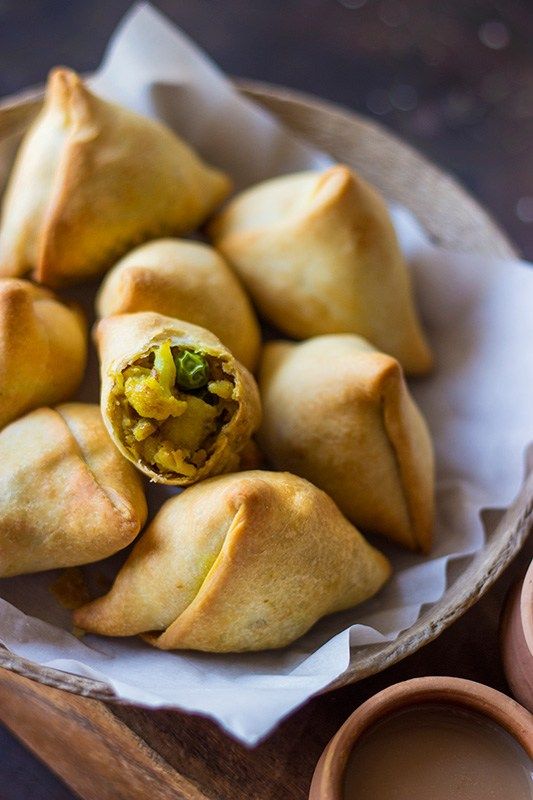
Piercing the outer shell you need to inhale the aroma and then eat a piece which is blended to perfection by soft potatoes laced with cauliflowers which are fine chopped. The Nolen Gur (date jaggery) is what the Bengali dreams are made of. A true Bengali is ready to trade off his diabetics medication for a plateful of Roshogolla soaked in date palm or nondescript-looking brownish coloured Sandesh! For the traditional Bong, a bite to Joynagar er Moa (made with popped rice and nolen gur) remains top on the checklist. The crown jewel of Bengali winter remains the Pithe-Puli starred by Patishapta (thin pancakes made from refined flour and filled with caramelized coconut which is finely grated) which sadly is fading to oblivion but finds its presence in plenty of food fairs organized during this time by several local clubs. There are many Bengali households I know, who have ‘Hansher Dim Kosha’ (curry of duck egg) to keep their body warm in the ‘freezing’ cold! And not to forget an eternal childhood memory in Kuler Acher (Jujube pickle)!
Does it mean there is nothing for a boozer? Considerate Park Street restros keep kettles of warm water ready to be gulped with Rum. Bengalis take no chances! We live to eat (or drink), isn’t it?
Winter is also a season of a withering pain within. How many of us sense a melancholy after sunset, a queer quietness which grips silently. It can be lonely and stressful at times with short days and long nights. Is it just a seasonal affective disorder (SAD) or there is more to it remains relative. A sense of isolation and anhedonia come hand in hand for sure.
All said and done, winter still is the season most of us look forward to. However, like everything in this fast changing world, the nature of winter too is changing. And all changes are not for good. Some people will keep reminiscing how winters in yesteryears were so very different than what we have now. A teeth clattering crowd surrounding a bonfire, are now sweet nostalgic memories of the past only to be replaced by people siting covered in a quilt with mobile phone in hand. But then, you need to embrace what you have.
The best of the winter is still alive among the chirping of cricket in a misty night in an obscure village or in a steaming hot ‘chai’ in an earthen pot in a roadside Dhaba at midnight. The quietness of a winter morning is best experienced in the fun game of breathing out to create smoke against a glass window! Simple things in life gives the best joy.
Ask Winter.
Pics: Internet
 Dabbler's Diary
We
LikeLike
We have clear demarcation of West Bengal in our mind ( North Bengal and South Bengal).
Our ( North Bengal) winters are so different from yours ( South Bengal, basically Kolkata).
Monkey Cap is a must for the Southerners when they visit North Bengal, even quite before winters set in. Southerners have geographical and visual feel of winter.
Loved and enjoyed your article. We will have more winterish discussion when we catch up next.
LikeLike